

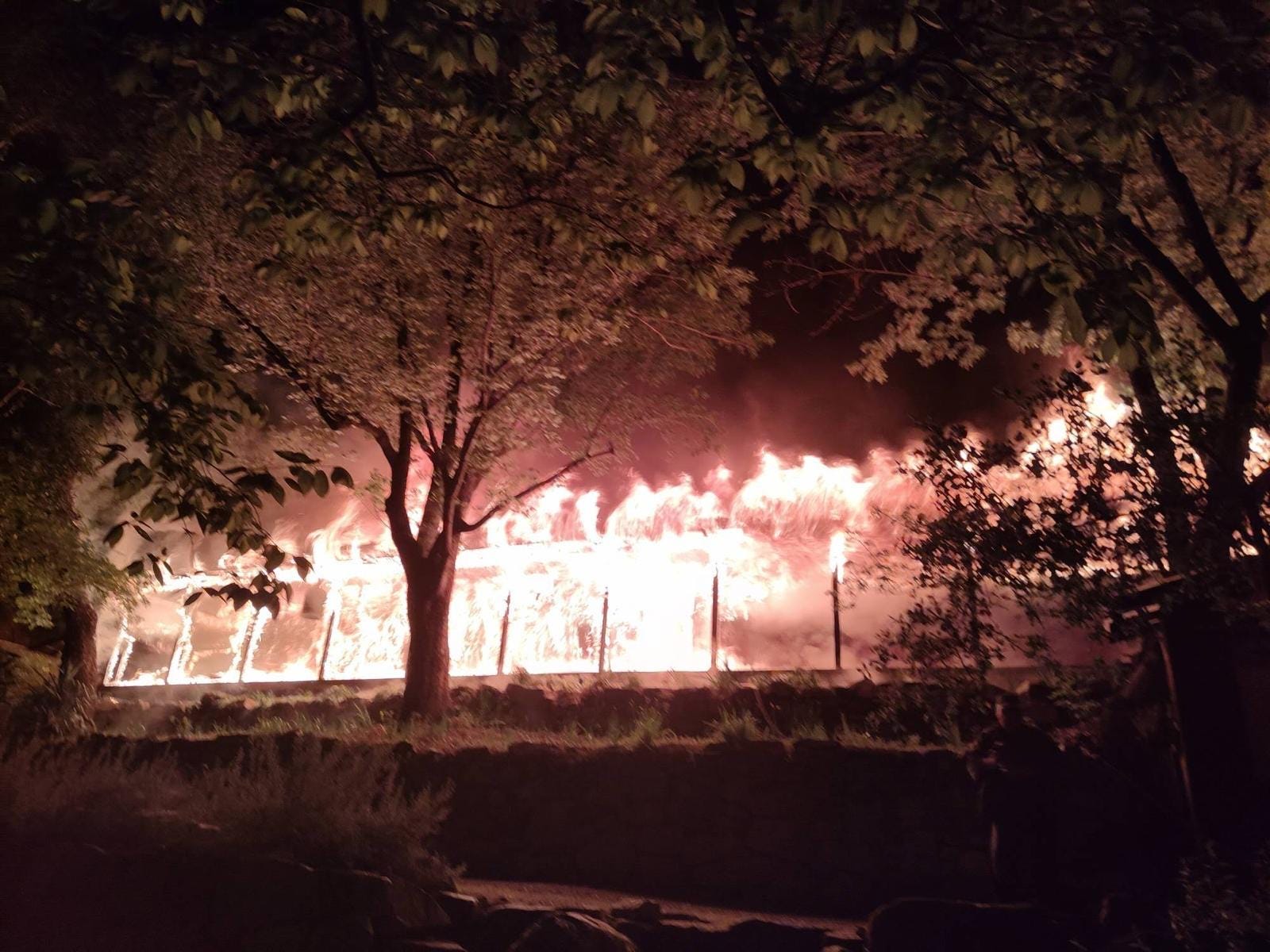
My heart is saddened and singed as I write this. A precious Dharma presence burned to the ground two weeks ago: the meditation hall at Tassajara Zen Mountain Center. The capacious building was a sacred space for thousands of people who crossed its threshold for 48 years. All that remains of its wood, though charred, its metal, though scorched, its rice-paper, though ashed, are the elements returning to their Nature.
In the monastic valley, nestled deep in the Los Padres National Forest, fire is the spectral frenemy that is ever-present: shimmering in the sunrise-orange bark of the madrone, shining in the sunset-red branches of the manzanita, and gleaming in the green spiky swords of the yucca.
Numerous fires—both wild-land and structural—have blazed through Tassajara since its gate first opened as a Soto Zen monastery in July 1967. Shunryu Suzuki and his first disciples meditated, chanted, ate oryoki meals, and listened to Dharma talks in the original zendo. In April 1978, seven years after Suzuki Roshi’s death, a fire destroyed this meditation hall, and the residents erected a new one in the upper garden, which was supposed to be temporary. While it became more permanent than initially intended, being razed by a fire reminds us all that everything is transient.
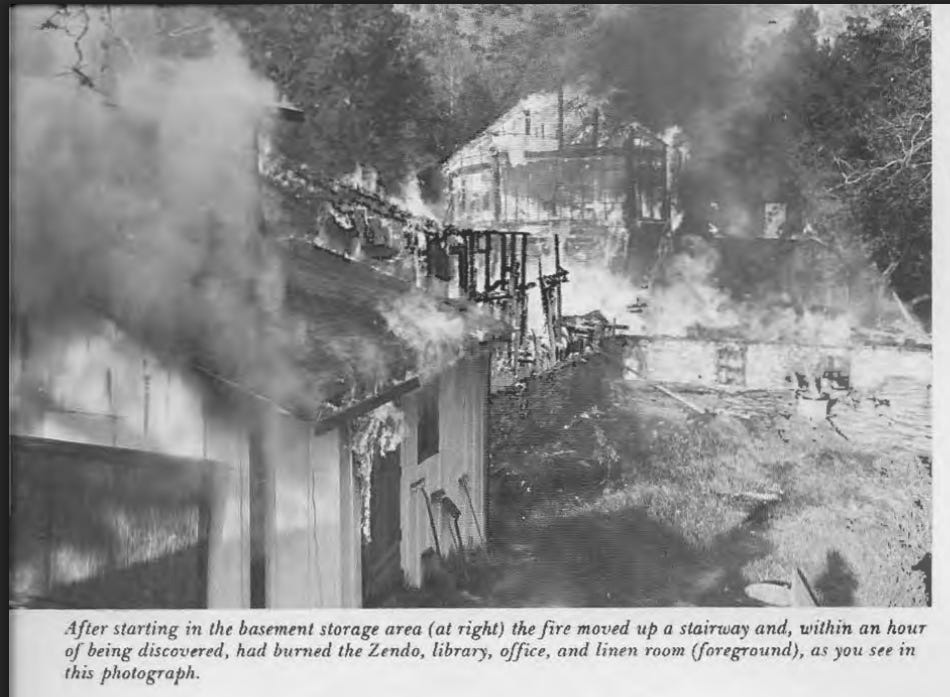
When I first stepped across the zendo threshold in June 2008, I thought my stay at Tassajara would be very temporary: just a six-month sabbatical from the ennui of the work-a-day world. Back then, I never imagined that the zendo would become a place as close to my heart as my childhood home. Although I came and went many times during the past 18 years, in total I lived at Tassajara for nine of them—having just left for the “last” time on Dec. 18th, 2025. Here is what I wrote in my journal the morning of my departing monk ceremony:
The most profound, transformative, and unexpected adventure of my 58-year-old self has been residing amid the stunning, ordinary beauty of this mountain valley. Words cannot describe how much I will miss this wild neighborhood where the moons and stars are our streetlights; the sunlight our lamplight; bells and wooden gongs our clocks; the zendo our sanctuary; the mountains our cathedral; and the hot springs our watery balm.
Whether burning down or standing firm, temporary or permanent—the zendo did not mind these labels of mind. The zendo never named itself; neither did the objects it housed: chant books and oryoki kits; metal bells and wooden fish; meditation cushions and chairs; candles and oil lamps; incense sticks and flower vases; an altar and statues. Mundane or sacred, the zendo made no distinctions. And yet. . .
“Because earth, grass, trees, walls, tiles, and pebbles, all engage in buddha activity, those who receive the benefit of wind and water caused by them are inconceivably helped by the Buddha’s guidance, splendid and unthinkable, and awaken intimately to themselves. Those who receive these water and fire benefits spread the Buddha’s guidance based on original awakening.” {Eihei Dogen in “On the Endeavor of the Way”}
“Splendid and unthinkable” indeed. By confining myself to the space within that building for thousands of hours, I received the benefits of water and fire, morning, noon, and night; spring, summer, winter, and fall. While meditating, chanting, prostrating; smiling, crying, and surrendering, the zendo was my one continuous, impartial witness. She welcomed me whether I was late for zazen, nodded off instead of sat upright, announced the wrong chant, struck the wrong bell, or entered with the wrong foot.
She stood steadfast as I stared at her white walls while tears streaked my cheeks, anger gripped my gut, and joy thrummed my heart. Whether my mind was devising grand plans or replaying ancient hurts, whether distracted or focused, I always felt embraced and enlivened by her cave of emptiness. When bats flew in and circled and swooped over head, she kept her cool. When I lost mine as the head of the meditation hall after pranksters left yellow rubber duckies and green gummy bears on meditation cushions, she remained unfazed.
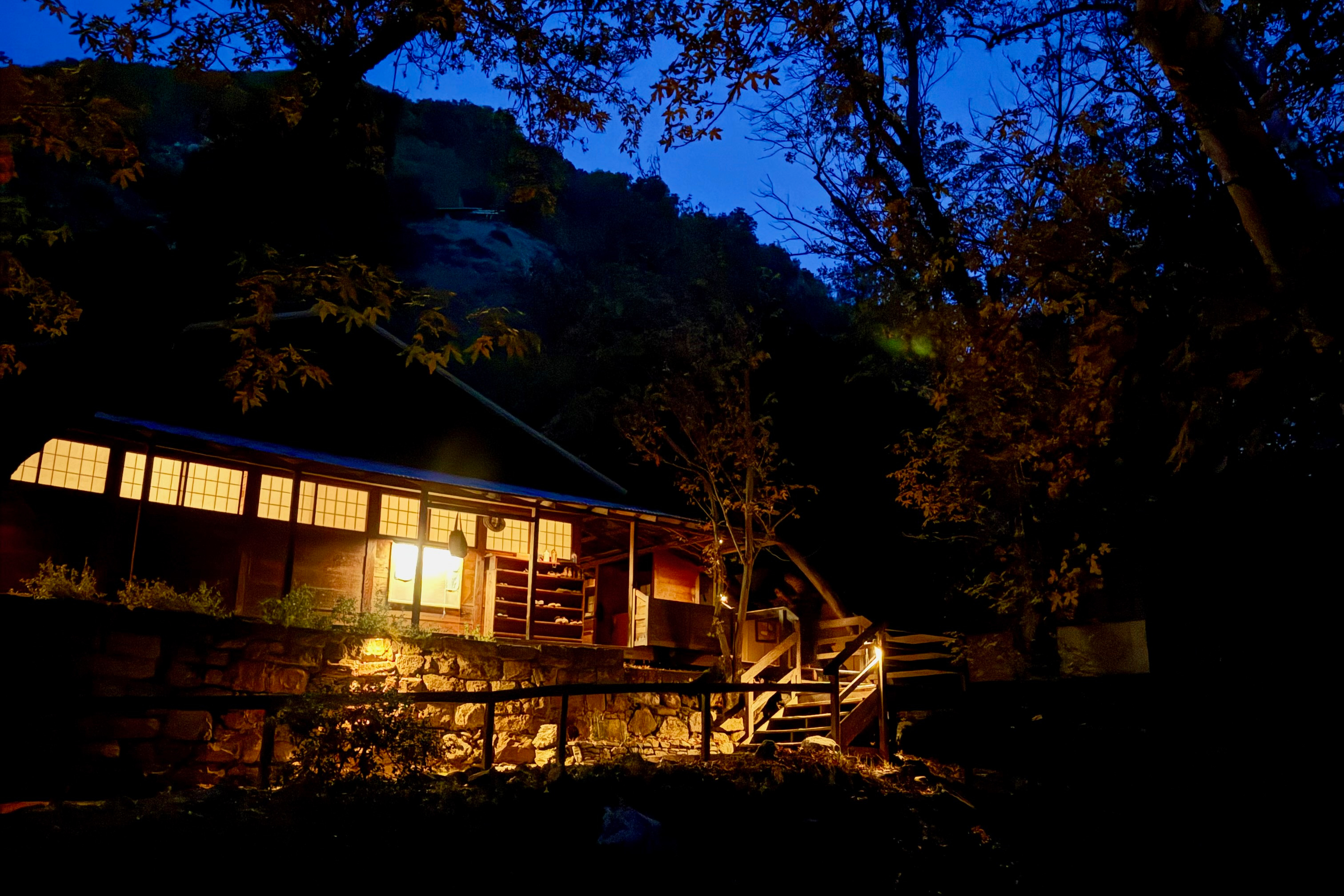
What did not burn—what can never be contained by walls, floors, and roofs—is the zazen of every single person who’s ever stepped across the threshold, whether their feet were stockinged or bare, whether they entered with their left or right foot, whether they sat crossed-legged or upright in a chair. Their energy and intention, their hearts and minds, radiate endlessly through the ash, the metal, the wood.
Well, all of this, what you've written here, is beautiful. Thank you. You gave words to the forever abiding sacred space at Tassajara, to the people practicing together, to the sun and moon and stars, the mountains and valleys, abiding to contain us. The zendo beyond the zendo.
I'm sorry to read of this tragic loss. Thank you for sharing your memories of the place. They, and the words you share here, are quite beautiful.