



In this episode of the Spark Zen podcast, I’m delighted to be in conversation with Professor Steven Heine, who is a leading scholar of Zen Buddhist history and thought, particularly the life and teachings of Eihei Dōgen. We discuss Steven’s book Tungxuan’s 100 Chan Questions: To Speak Without Speaking—a commentary on a significant Zen Buddhist koan collection.
This 13th century text demonstrates key aspects of Caodong discursive practice, reflecting the school’s philosophy that Chan transmission should be based on a rhetoric of minimalism, or an exceptionally concise and cryptic writing style that conjures how “to speak without speaking.” This technique is particularly suited to cultivating a manner of contemplative training based on the notion of pragmatism, or the application of a nondual standpoint to examples of everyday moral decision-making.
One of the main commentators on this collection was the 13th-century master Wansong, best known for compiling the Book of Serenity (1224) using Hongzhi’s 12th-century koans and poetry. Steven explains the north–south empire differences between Hongzhi’s Hangzhou context and Wansong’s Beijing setting under the Jin and emerging Mongol power, including Wansong’s role in building a syncretic Buddhism integrating Huayen, Chan, Confucianism, and Daoism and his ties to Genghis Khan. Steven and I compare koan collections’ styles and practice aims, discuss Huayen’s relation to “silent illumination” and shikantaza, and consider Dogen’s exposure to Hongzhi, limited evidence of a koan curriculum, and the structured use of koans in Dogen’s Buddha Nature fascicle.
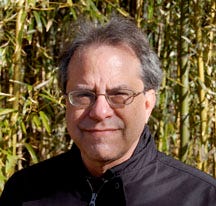
Professor Steven Heine is a leading scholar in the field of Zen Buddhist history and thought, particularly the life and teachings of Dogen. He has authored and edited nearly three dozen books, including Dogen and the Koan Tradition, Did Dogen Go to China?, Dogen: Textual and Historical Studies, and Readings of Dogen’s Treasury of the True Dharma Eye. Professor Heine has also taught and published extensively on Japanese and East Asian religion and society in worldwide perspectives. He is the Director of Florida International University’s Asian Studies Program. Professor Heine has published numerous books on Dogen, koans, and Chan/Zen poems:


